Oprime aquí para leer la versión en español de mi página de investigación.
I describe myself as a food systems and interdisciplinary social scientist. In general, I am interested in studying the social dimensions of agriculture and fisheries, considering public health and sustainability outcomes, in the context of disasters and natural hazards.
I work with farmers, fishers, organizations and institutions interested in food systems issues, including community-based groups, NGOs, and government, on different applied research projects and capacity building strategies to support climate adaptation and public health outcomes. I do so while contributing to scientific knowledge and social theories that advance our understanding of social-ecoligical systems and of decision-making processes.
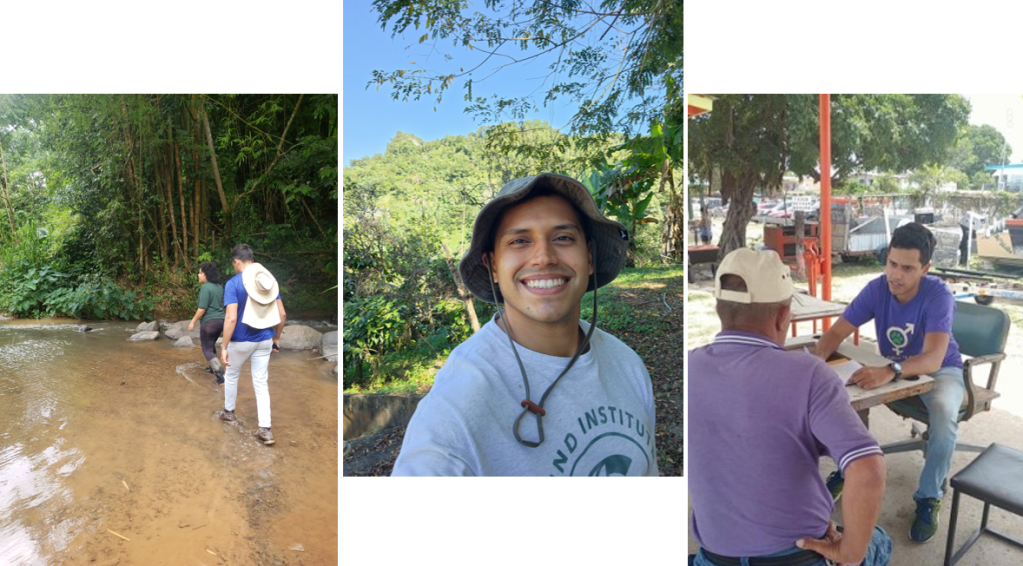
These are the research areas I focus on:
Sustainable food systems and climate adaptation
This line of work aims to generate information, resources, and tools that support farmers, fishers, and service providers in their decision-making processes related to climate adaptation, sustainable food production, and policy dynamics.
Food security, food sovereignty, and disasters:
This work seeks to understand how we navigate disruptions in the built and natural environments to produce and access food in the context of compounded shocks. It is grounded in the assertion that disasters are not natural. It also uses interdisciplinary approaches to better understand our relationship to components of our food system.
Vulnerability and natural hazards:
Here I engage with public health, NGO, community, and governmental sectors, to work in understanding social determinants of health and wellbeing in relation to natural hazards. This work also explores the role of governance structures on individual outcomes.

Projects I am working on:
RICE PR: Reimagining Innovative Cultivation for Equity in Puerto Rico

RICE PR aims to enhance the production of a global staple in the face of climate change. This transdisciplinary collaboration engages in participatory research to reintegrate and expand rice cultivation through farmer participation, genetic research, climate-resilient management practices, and reclaiming tradicional/ancestral knowledges.
This project is guided by a participatory approach, following agroecological principles and farmer-to-farmer methodology. It will use mixed-methods to complete the four phases that make up the project:

This project was one of three awarded projects that won the “Nourishing Next Generation Agrifood Breakthroughs” (Innovation Challenge), funded by he U.S. Department of Agriculture (USDA), in partnership with the Foundation for Food & Agriculture Research (FFAR). You can watch our narrated PPT video here. I am Co-PI of this project, led by Maya Moore (PI).
A positive future for Puerto Rican food systems:
I am researching and writing about how people working in agriculture and fisheries envision or think about a «positive future» for our food system. I am using ethnography to listen and tell stories that reflect what the Puerto Rican agricultural and fisheries sector imagines around an ideal food production.
What are the political and social structures that need to be created, restructured or eliminated to safeguard the agriculture and fisheries of our islands, the welfare of those who work it and to support future generations who wish to work the land and fish our waters? How can a better connection be made with food production, between the coast and the mountains, the consumer and the farmer and fisherfolk?
My goal is that this work will contribute to current and future conversations related to the transformation of our agri-food system.
Public health tools and resources for farmers and farmworkers:
I am Co-PI of this project with Marysel Pagán Santana of the Migrant Clinicians Network. Mentes Puertorriqueñas en Acción, the Caribbean Climate Hub, the University of the Virgin Islands and the University of Puerto Rico are also partners in this work.
The objective of this capacity-building intervention, funded by USDA-NIFA, is to support community health centers in Puerto Rico and the Virgin Islands to expand their services to agricultural communities on occupational health, climate adaptation, and to integrate climate change awareness into their health and wellness services. This project has several phases involving needs assessment, research, and development of educational materials, and community outreach.
Social, economic and environmental dimensions of agricultural resilience:
This work is led by Aura Alonso Rodríguez of the University of Vermont. Its objective is to measure how the different elements that make up the agricultural enterprise influence and relate to each other in terms of the capacity of farms and farmers to resist and recover from climate impacts. Interviews and questionnaires have been conducted to compile socioecological data. These are currently being analyzed and combined with geospatial data.
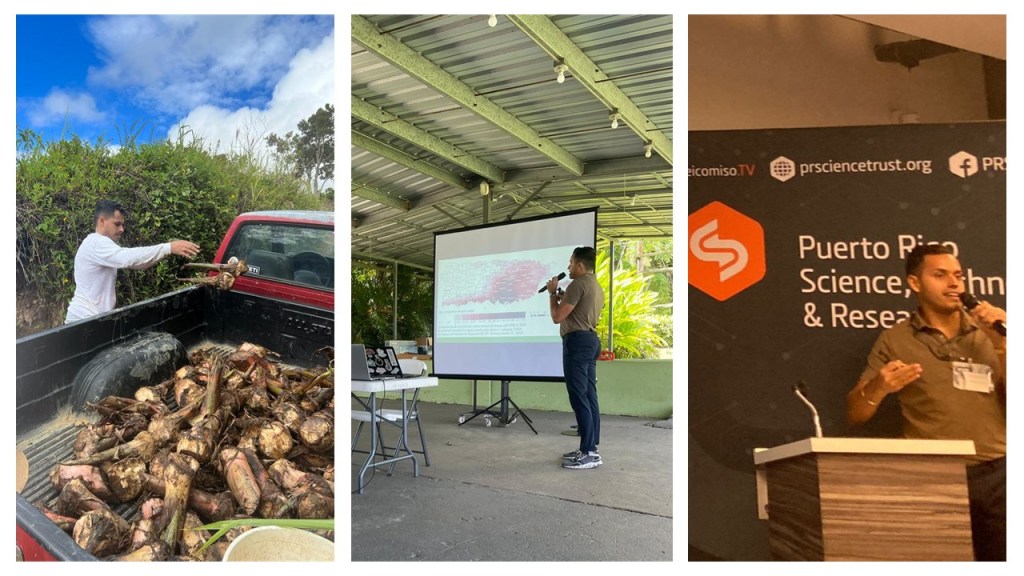
Selected completed works:
- Social dimensions of landslide hazards: This work was led by Jocelyn West and I collaborated with her, along with K. Stephen Hughes. This work, funded by the Centers for Disease Control and Prevention (CDC) through the Natural Hazards Center, aimed to assess the social vulnerability of Puerto Rican residents to landslides. We extended the work done by SLIDES PR on landslide susceptibility and added demographic layers, among others, so that emergency managers have a tool to support their decisions. We also conducted interviews and focus groups to qualify landslide risks. You can acces the open access report here. A next phase include further analysis of the qualitative data, network analysis and filming, plus scientific outreach and communication activities.
- Interventions to support nutrition outcomes: This was a collaborative work with Meredith T. Niles for the U.S. Agency for International Development (USAID). We conducted a systematic literature review to determine what climate change adaptation and mitigation interventions to address fnutrition outcomes have been implemented in low- and middle-income countries. We are developing a report, based on the information reviewed, to make recommendations to USAID on program design and evaluation. The main objective is to provide the agency with practical and up-to-date information to assist it in developing interventions in the context of climate change.
- My doctoral dissertation focused on understanding how different components of the Puerto Rican food system (social, ecological, agricultural, and political) relate to farmers’ adaptive capacity–meaning those sets of resources and abilities people have to prepare for, withstand, cope with, and recover from impacts. It looked at Puerto Rican farmers adaptation and food security outcomes in light of their recovery from Hurricane Maria to better understand potential drivers and barriers to strengthen adaptive capacity. This dissertation is based upon a survey of 405 Puerto Rican farmers that was carried out after Maria thanks to the UPR Extension Service. Check the research brief here.

You can check my CV for more information on current and past projects.
Research topics of interest: Island food systems, natural hazards and working lands, food security and food sovereignty, adaptive capacity and structural vulnerability, agroecology, social-ecological systems, science communication and outreach, Puerto Rican and Caribbean studies, food culture, governance, public health, and public policy.
My work has appeared on The Grist, Rollingstone, El Nuevo Día, The Bittman Project, PBS, and other outlets. See my CV for links.
Soy un escritor, comunicador científico e investigador juanadino que se la pasa investigando, creando y comiendo.
I am a writer, science communicator, and researcher based in Juana Díaz, Puerto Rico

 Luis Alexis